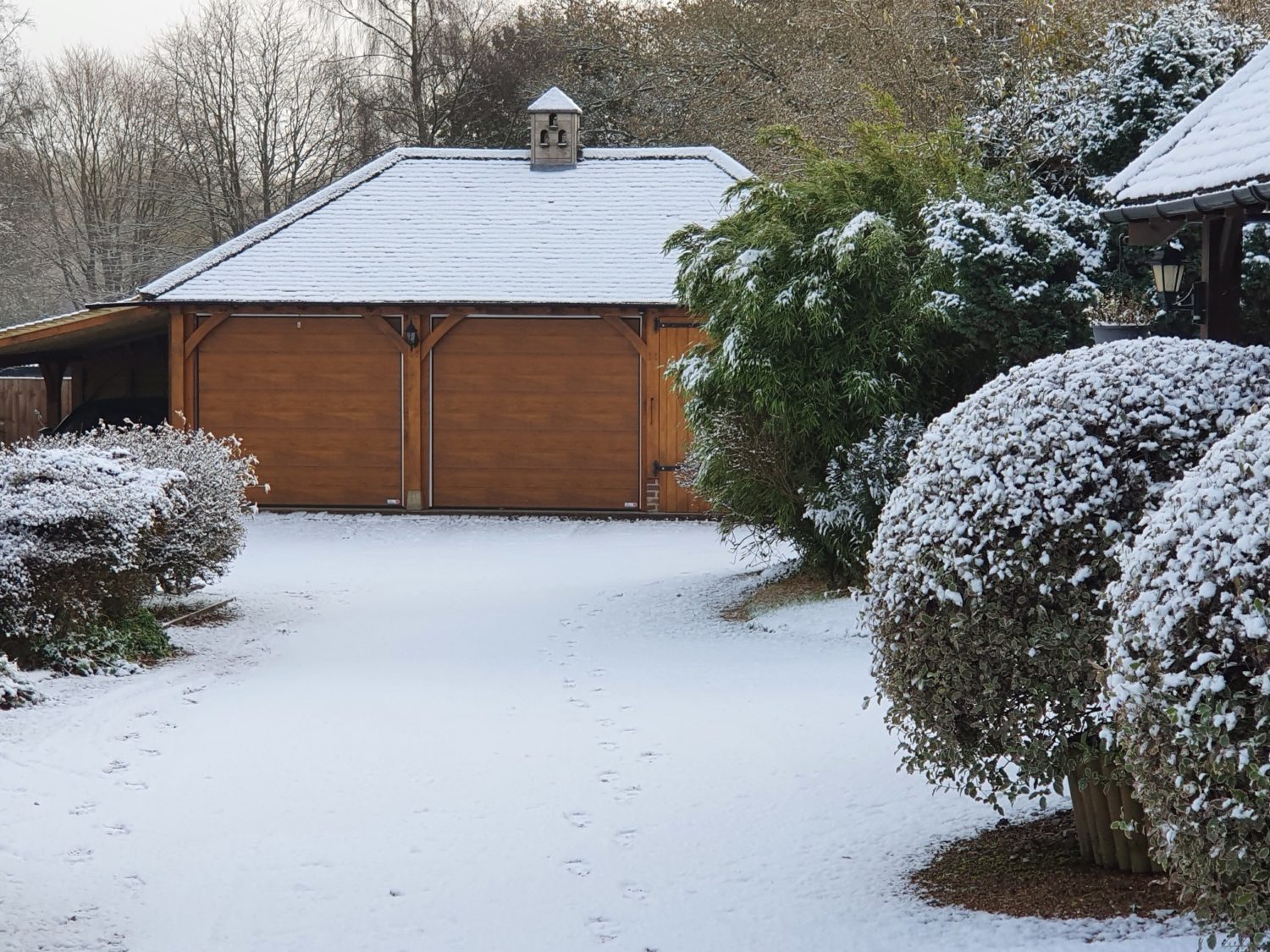

Garage doors have a habit of picking the worst possible moments to misbehave. There’s something about frosty December mornings when you’re running late that brings griping mechanical problems to the surface.
Fear not, as most winter garage door issues are preventable. A bit of attention before the cold weather properly arrives saves you standing in the freezing cold, jabbing at remote controls whilst your door refuses to budge.
Here are the simple checks that keep electric garage doors and manual doors working smoothly through winter.
Lubrication For Seize-Ups
Cold weather thickens lubricants and causes metal to contract slightly, which can cause moving parts that worked fine in summer to bind and struggle when temperatures drop.
Proper lubrication before winter makes a huge difference here and is very easy to apply.
For sectional garage doors, focus on the hinges between panels, the roller wheels that run in the tracks, and the springs. Use thicker garage door lubricant rather than general WD-40 – you need something that stays put in cold weather rather than running off.
Roller doors need the guide rails lubricated where the curtain runs, while side-hinged doors need the hinges treated, particularly if they’re showing any surface rust.
Don’t overdo it though – a light coating is plenty. Too much lubricant attracts dirt and dust, which then gums up the works.
Check the Seals Before Water Gets In
The rubber seals around your garage door keep weather out and heat in, but over time they perish, crack, and lose flexibility. Cold weather makes damaged seals worse because the rubber becomes brittle.
Walk around your door and check the seals carefully:
- Bottom seal: Takes the most punishment from being dragged across the garage floor. Look for sections that are compressed, torn, or missing entirely.
- Side seals: Check where the door meets the frame on both sides. Gaps here let in wind-driven rain and drafts.
- Top seal: Often neglected because it’s harder to see, but gaps at the top let rain run down the inside of your door.
Replacing seals is straightforward and inexpensive compared to dealing with water damage inside your garage, and most can be fitted without specialist tools.
Safety Sensors and Moving Parts
Electric garage doors have safety sensors that stop the door from closing if something’s in the way.
These typically sit at ground level on either side of the door opening and rely on proper alignment. Cold weather, ground movement, or accidental knocks can misalign sensors, which means your door might refuse to close or – worse – close when it shouldn’t.
Testing and Checking Springs
Test your sensors by closing the door and waving something across the beam. The door should stop and reverse immediately. If it doesn’t, the sensors need realigning or cleaning because dirt, cobwebs, or condensation on the lenses can block the beam just as effectively as misalignment.
Garage door springs are under enormous tension and cold weather affects spring tension, which means worn springs can snap when stressed by temperature changes.
Look at your springs (they’re usually mounted above the door) and check for visible gaps in the coils, rust or corrosion, or any signs of recent movement.
If springs look dodgy, call someone who knows what they’re doing because they’re genuinely dangerous to adjust without proper tools and experience.
When to Call Skandoor
Some maintenance you can handle yourself, but grinding noises, uneven movement, or signs of structural issues need professional attention.
At Skandoor, we service garage doors throughout Hampshire and the south, and we’d rather fix small problems early than get emergency calls when doors have failed completely in January.
Need your garage door checked before winter? Contact our friendly team to arrange a service visit.
Request a free survey
"*" indicates required fields