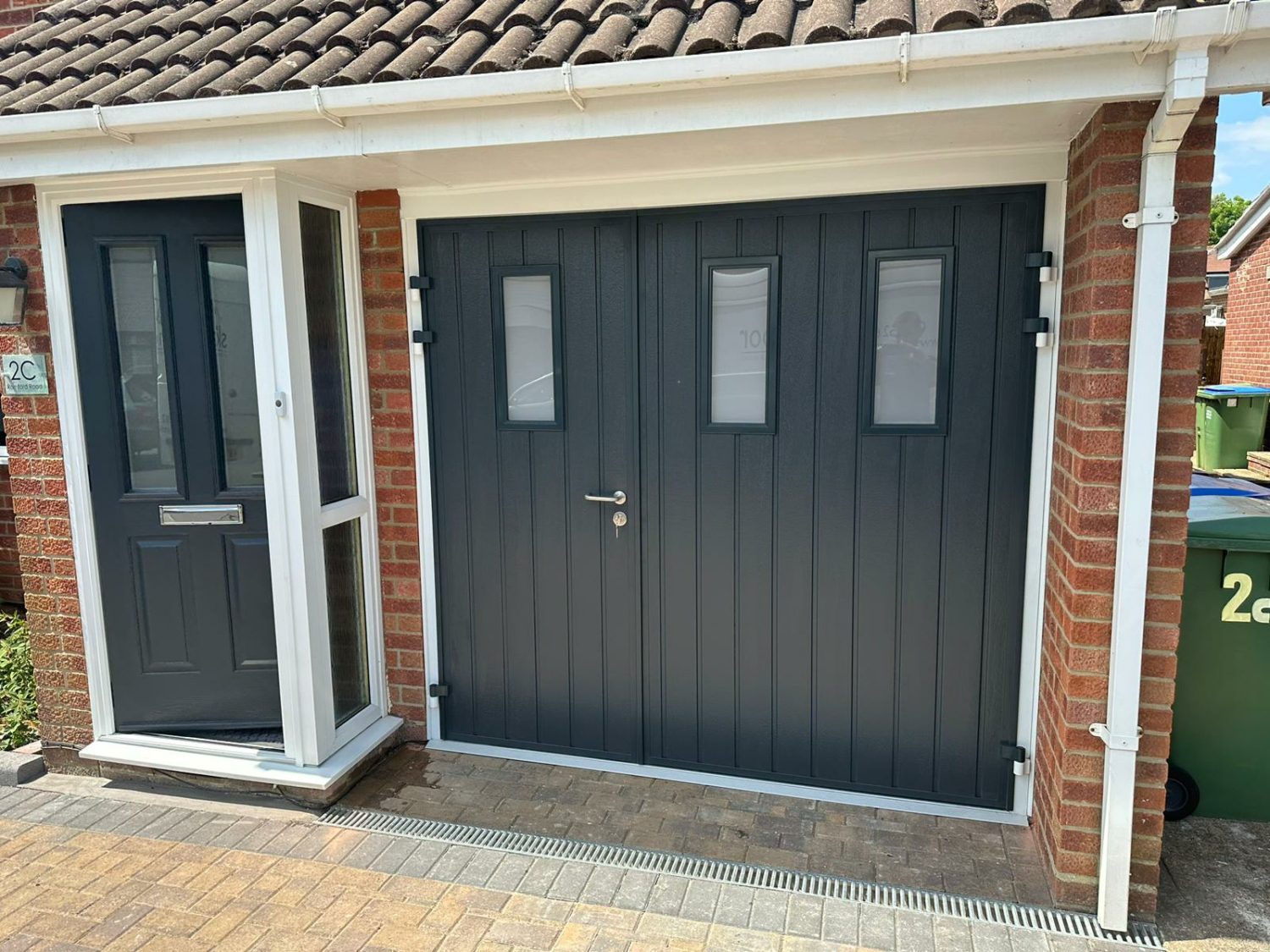

Side-hinged garage doors are about as mechanically simple as garage doors come. No motors, no tracks, no springs under tension – just two leaves hanging on hinges.
That is undoubtedly part of their appeal, but they still need TLC. Hinges wear, seals perish, leaves drop out of alignment – though it can take decades with a high-quality door from the get-go.
Nevertheless, none of it is complicated to deal with, and most of it you can do yourself in half an hour. Read on for what to check and when.
Hinges
The hinges carry the full weight of both door leaves, so they take more strain than you might think – especially on larger or side-hinged insulated garage doors where the panels are heavier.
Check them twice a year. You’re looking for:
- Smooth movement with no grinding or stiffness
- No visible sagging where the hinge meets the frame
- Screws that are still tight and seated properly
- No rust or corrosion building up around the hinge pins
If a door leaf has started to drop, the hinges are usually the first place to look. Sometimes, tightening the screws is enough.
If the screw holes have worn out and the fixings won’t hold, you may need to reposition or replace the hinges entirely. A smear of light machine oil on the hinge pins once or twice a year keeps things moving freely.
Weather Seals
The rubber seals around your door do more work than most people realise. They’re there to keep out rain, draughts, leaves, and dust, and once they start to fail, your garage feels it quickly.
Run your hand along the seals with the door closed. You shouldn’t feel any obvious draughts or see daylight coming through. Look for cracking, compression, or sections that have come away from the frame. Bottom seals may wear first because they’re in contact with the ground.
On the positive side, replacing worn seals is simple and relatively cheap, but leaving them makes a real difference to how warm and dry your garage stays – especially through winter.
Alignment and Adjustment
Over time, door leaves can shift slightly. The ground settles, frames move, hinges wear. You’ll notice it when the two leaves no longer meet neatly in the middle, or when one starts catching on the floor.
Small adjustments to the hinges can usually correct this. If your door has adjustable hinges, you can tweak the vertical and horizontal position of each leaf without removing anything. If it doesn’t, packing shims behind the hinge plates can bring things back into line.
Signs your doors need adjusting:
- A visible gap or overlap where the two leaves meet
- One leaf dragging on the floor or catching on the frame
- The latch or locking mechanism not engaging smoothly
- More effort needed to open or close than there used to be
If the misalignment is severe, it’s worth having someone look at the frame itself – the problem may not be the door.
Cleaning and Surface Care
A wash with warm, soapy water a couple of times a year removes grime and prevents dirt from building up in the seals and hinges. Avoid anything abrasive or solvent-based – it’ll damage the powder coat finish.
If you spot any chips or scratches in the coating, touch them up sooner rather than later. Exposed surfaces will start to corrode once moisture finds them.
Book a Service With Skandoor
Skandoor installs and maintains side-hinged garage doors across Hampshire, Dorset, Wiltshire, Surrey, and the surrounding counties.
If you’re not confident tackling adjustments yourself, or your doors need new seals, hinge replacement, or a proper check-over, we can send someone out.
We also supply and fit new side-hinged garage doors – including insulated models – built at our workshop in Bishop’s Waltham and installed in as little as a day. Fill in our contact form to arrange a free survey.
Request a free survey
"*" indicates required fields