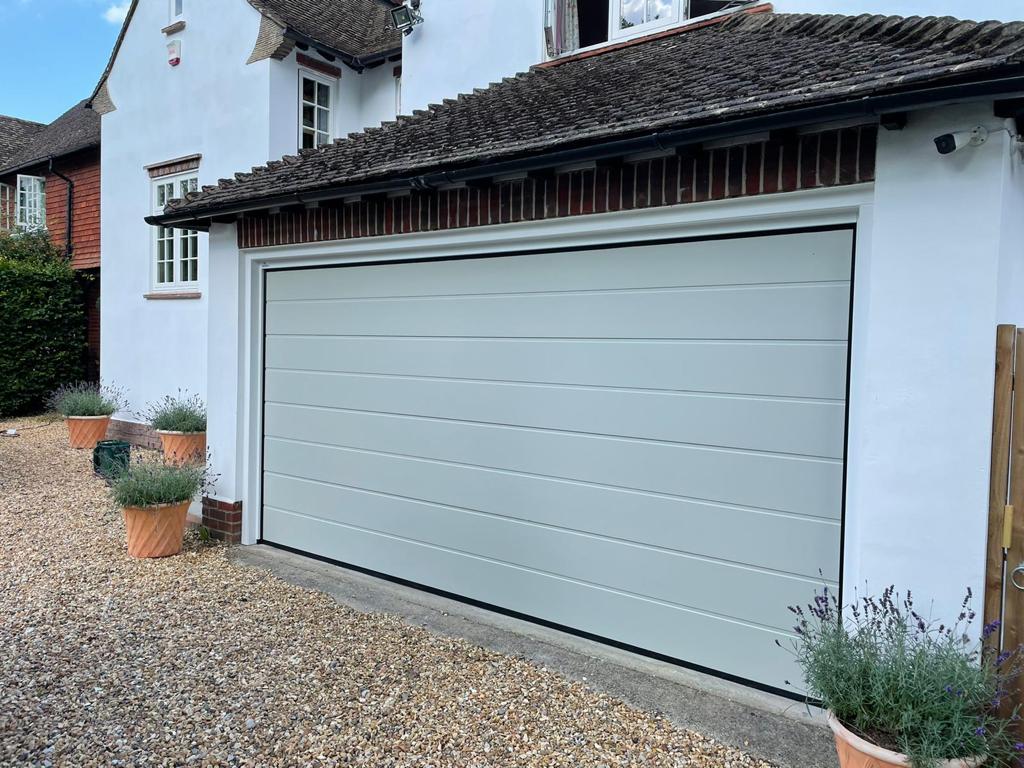

Upgrading to insulated sectional garage doors costs more than standard versions. Whether that extra expense makes sense depends on how you use your garage and what matters to you.
If your garage is just for storage of tools and rarely used items, basic doors probably suffice.
But if you work in there, use it as a workshop, or have rooms above or adjacent to it, insulation makes a noticeable difference to comfort, energy bills and noise.
Let’s look at what insulated doors actually offer and whether they’re worth the upgrade for your situation.
Understanding Insulated Garage Doors
Insulated garage doors have foam or similar insulating material sandwiched between panels.
This creates a thermal barrier that reduces heat transfer between inside and outside.
Standard doors are single-skin metal panels. They provide security and weather protection, but don’t stop heat loss or gain particularly well. Insulated versions add a layer that makes a genuine difference to temperature control.
The insulation thickness varies; thicker insulation generally means better thermal performance, though it also means higher cost and weight.
At Skandoor, our insulated sectional garage doors are sealed and fully insulated – designed for garages that need proper temperature control rather than just basic protection.
Energy Efficiency Benefits
Garages attached to houses constantly leak heat. That freezing garage door lets cold seep into adjacent rooms. If you have bedrooms or living spaces above or next to the garage, your heating system is likely working overtime.
Insulated garage doors have a dramatic impact here. If you’ve installed heating in your garage – for workshop use, say – the difference is immediate.
But even if not, the effect on adjacent rooms can be significant. Plus, keeping the temperature stable in the garage itself is beneficial for storing items like cars, motorbikes, bikes, and other vehicles, which won’t suffer from high temperature differentials and dampness.
Summer works in reverse. Insulated doors help prevent your garage from turning into an oven when it’s hot outside, which matters if you’re storing anything temperature-sensitive or trying to work in there.
Noise Makes More Difference Than You’d Think
Traffic noise, neighbours, and weather. Whatever the source, insulated doors muffle external sound considerably.
External noise from traffic, neighbours or weather gets muffled considerably by insulated doors. If you work in your garage, this makes the space much more pleasant.
The insulation works both ways though – noise from inside doesn’t escape as easily either, so running power tools or working late evening won’t bother neighbours or wake your household.
Tougher Construction
Insulated doors are more robust than single-skin versions. The extra material makes them stronger and more rigid, which has security implications. They’re harder to force, dent or damage.
Combined with decent locking (our doors have no external handles or keyholes), insulated doors provide better security than standard alternatives. They also handle daily wear durably.
The sealed construction better protects against weather extremes, too, extending how long the door lasts before needing replacement.
Who Benefits Most
Insulated doors make the most sense if you:
- Use your garage as workshop space: Spending hours in there means temperature and noise control transform how usable the space feels
- Heat your garage: If you’ve invested in heating, insulation stops that warmth disappearing straight through the door
- Have living spaces attached: Bedrooms above or rooms adjacent benefit considerably from reduced temperature transfer and noise
If your garage is detached, rarely used, and used solely for storing items that don’t care about temperature, standard doors will probably do fine. You’d be paying for benefits you won’t use.
Insulated Garage Doors From Skandoor
Our garage doors, designed in Scandinavia and built in the UK, are designed with insulation, toughness, and longevity in mind.
We manufacture and install doors across Hampshire, Dorset, Wiltshire, Surrey, Berkshire, Buckinghamshire and Oxfordshire. We’re happy to discuss your specific situation and whether insulated sectional garage doors make sense for your setup.
Want to discuss insulated options? Contact Skandoor to arrange a free survey.
Request a free survey
"*" indicates required fields